Lobster Issue 28 (December 1994)
[…] of the CIA. It appears that one of its main roles is to monitor the clandestine activity of other US government agencies. Coleman’s DIA job was to spy on the Drug Enforcement Administration (DEA), which operated out of a base in Cyprus. Coleman alleges that the DEA is supervising, and the DIA is manipulating, […]
Lobster Issue 49 (Summer 2005)
[…] communications advisory and agency services, mostly to non-OECD interests and NGOs. Corinne Souza is a former lobbyist, now a freelance writer. Her most recent book is Baghdad’s Spy (Mainstream, 2003). Simon Matthews is a former trade union district secretary with an MA in Modern History. Scott Newton is Senior Lecturer in Modern British and […]
Lobster Issue 41 (Summer 2001)
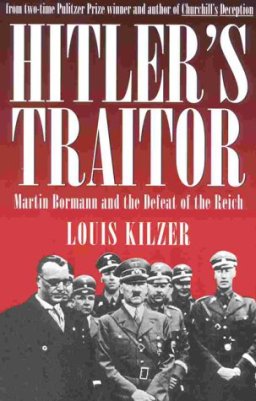
[…] view. His book is basically a study of the ‘Red Orchestra’, an area already covered in detail. The author shows that this was, indeed, a very big spy ring. (The CIA were still investigating its activities well into the 1970s, believing that portions of it had survived various Gestapo crack-downs and had gone on […]
Lobster Issue 48 (Winter 2004)
[…] proved: That, while I was working for South African Intelligence in London in 1969 (I was officially deported from South Africa in 1966 so that I could spy for BOSS in Britain) the head of BOSS, H. J. van den Bergh, assigned me to infiltrate an extremely furtive underground political group based in South […]
Lobster Issue 73 (Summer 2017)
[PDF file]: […] and transgressions by past American presidents. 5 See, for example, Phillip Knightly, ‘The History of the Honey Trap’, ForeignPolicy.com, 12 March 2010 at ; Christopher Beam, ‘The Spy Who Said She Loved Me’, Slate.com, 9 December 2010 at ; Jonathan Zimmerman, ‘Petraeus and the Blackmail Myth’, Los Angeles Times, 16 November 2012; Wikipedia, ‘Love, […]
Lobster Issue 70 (Winter 2015)
[PDF file]: […] Harvey Oswald 3 in which Epstein tries to prove that Oswald fell victim to an elaborate Soviet intelligence ‘honey trap’ while in Japan that led him to spy for the KGB. Shortly after Legend appeared in print, however, investigators for the House Select Committee on Assassinations (HSCA) interviewed some of Epstein’s purported sources. The […]
Lobster Issue 73 (Summer 2017)
[PDF file]: […] 18 of the United States Code which incorporates the provisions of the 1917 Espionage Act. Of course one could argue that it is not a crime to spy on the enemy when at war. However, officially at least the US has not been at war since 1945 – at least not within the conventional […]