Lobster Issue 30 (December 1995)
This is a slightly abridged version of part of chapter four of Mark Curtis’s book The Ambiguities of Power: British Foreign Policy since 1945 (Zed Press, 1995) reviewed below. In August 1953 a coup overthrew Iran’s nationalist government of Mohammed Musaddiq and installed the Shah in power. The Shah subsequently used widespread repression and torture … Read more
Lobster Issue 47 (Summer 2004)
[…] politicians claimed that the FRU was directed at loyalist and republican para-militaries, this is simply untrue ….the FRU was prevented by RUC Special Branch from infiltrating loyalist murder gangs.’ (p. 32) (1) The exception to this was ex-Army Brian Nelson, the ‘intelligence officer’ of the UDA, who directed the UDA’s killing of republicans for […]
Lobster Issue 52 (Winter 2006/7)
[…] 27 August 2006). See also Terry Hanstock’s Re: in this issue – ed. Note: ‘unwelcome’ public sector histories are always of interest. For example, in his book Murder in Samarkand, former British Ambassador to Uzbekistan Craig Murray writes: ‘I returned to London for a conference. At a meeting with Linda Duffield, Director of Wider […]
Lobster Issue 47 (Summer 2004)
Colin Crawford. London: Pluto Press, 2003, £14.99, p/back When World-in-Action and Tribune journalist David Boulton published his excellent book, The UVF, 1966-73, (Torc Books, 1974) he bemoaned a near absence of valuable books and journal articles on Loyalism. In contrast to their Republican counterparts, Loyalists do not have a substantive support base overseas; nor … Read more
Lobster Issue 35 (Summer 1998)
[…] Ray had managed to acquire the identities of four men in Toronto who all looked like him, but omitted any of the subsequent research on the King murder, such as that by John Edginton, the British TV producer, and particularly by Dr William Pepper. Godfrey Hodgson’s obit in the Independent (25 April 1998) was […]
Lobster Issue 43 (Summer 2002)
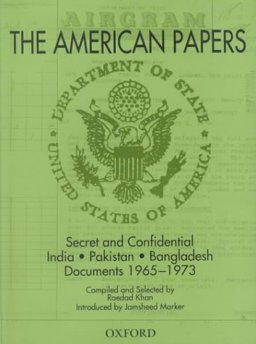
ed. Roedad Khan Pakistan: Oxford University Press, 1999 Faisal A. Qureshi This book caused quite a stir when published in Pakistan due to the government’s reluctance to declassify its own documentation for this period. The editor deserves credit for going to the US and utilising the FOIA to put together and index various documents, such … Read more
Lobster Issue 40 (Winter 2000/1)
MI5 and the Wilson Plot The MI5 website (www.mi5.gov.uk) has a section called ‘myths and misunderstandings’, which features, among other things, ‘the Wilson Plot’. The paragraph it devotes to this episode is worth studying. It refers the reader to Spycatcher and Peter Wright’s allegation that ‘up to 30 members of the Service had plotted to … Read more