Lobster Issue 48 (Winter 2004)
The apparent re-election of George W. Bush as US President seems to have its roots in a mechanical failure. On 12 March 2004, a car went out of control on a busy highway and propelled itself in front of an 18-wheeler. The driver – an African-American clergyman called Athan Gibbs – was killed outright. Gibbs, … Read more
Lobster Issue 41 (Summer 2001)
Mandy’s place in things On 12 June 1999 The News, Portugal’s weekly English-language paper, ran this comment on the Bilderberg meeting which had then just taken place in Portugal. The 47th Bilderberg Conference has come to an end. Members and one-off participants have departed as discreetly as they arrived. Lines of black limousines, unmarked except … Read more
Lobster Issue 52 (Winter 2006/7)
BAP There was a nice little twist to be observed by followers of the British American Project when Home Office minister Baroness Scotland dashed to Washington this summer seeking to prevent the extradition of the NatWest Three, caught in the long shadow of Enron. The old friend of Tony and Cherie Blair was a young … Read more
Lobster Issue 54 (Winter 2007/8)
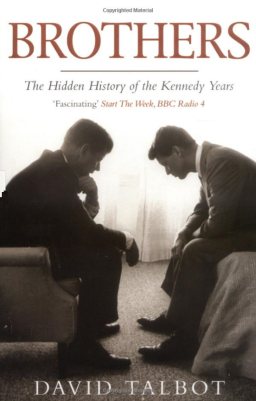
[…] For the military it was straightforward: the US had the strategic nuclear advantage (the ‘missile gap’ had been forgotten) and thus could and should invade Cuba. Never mind even pretending to the world that it was a Cuban insurrection – the dumb little plan behind the Bay of Pigs invasion. As if the cover […]
Lobster Issue 31 (June 1996)
[…] 2 Though I still don’t buy Walter Bowart’s Satan’s Slaves Meet Black Helicopters thesis, the winter 1995 issue of Unclassified offers one of the footnotes Bowart’s Operation Mind Control 2 cries out for, an article about a CIA-sponsored paedophile group called ‘The Finders’. The tale is bizarre, but it contains names, dates and documentation […]
Lobster Issue 41 (Summer 2001)
[…] suspect is named on net’, Sunday Times 11 February. ) Having either been given access to Cryptome’s logfiles or hacked into them, the MoD then changed its mind and, quoting the spurious 233 figure, declared this not widely in the public domain, and threatened the newspapers with an injunction if they published the name. […]
Lobster Issue 35 (Summer 1998)
A stranger harvest The best single volume on the alien abduction connundrum I have come across is C.D. B. Bryan’s Close Encounters of the Fourth Kind (Weidenfeld and Nicolson, London 1995). In it Linda Moulton Howe, the American film-maker who made A Strange Harvest about the ‘cattle mutilation’ phenomenon in the United States, describes to … Read more
Lobster Issue 54 (Winter 2007/8)
[…] had to be rethought. Inevitably, which contributions seem most important in a collection such as this reflects the interests and concerns of the reviewer. Bearing this in mind, of particular interest in this are Piotr Wrobel’s ‘An NKVD Residentura (Residency) in the Warsaw Ghetto’, Hilary Earl’s ‘Confessions of Wrongdoing, or How to Save Yourself […]