Lobster Issue 35 (Summer 1998)
A stranger harvest The best single volume on the alien abduction connundrum I have come across is C.D. B. Bryan’s Close Encounters of the Fourth Kind (Weidenfeld and Nicolson, London 1995). In it Linda Moulton Howe, the American film-maker who made A Strange Harvest about the ‘cattle mutilation’ phenomenon in the United States, describes to … Read more
Lobster Issue 46 (Winter 2003)
In an article in the Journal of Popular Culture, (1) one of the editors of the Jonestown Report considers the role that conspiracy theories have played in the unfolding narrative of ‘Jonestown’. It is a worthwhile endeavour to which few scholars could bring better credentials. Rebecca Moore is a professor of religious studies at the […]
Lobster Issue 56 (Winter 2008/9)
Maggie, Maggie, Maggie Giles Scott-Smith,(1) who wrote about the Congress for Cultural Freedom in Lobster 36 and 38, has written a very interesting study of Margaret Thatcher’s first visit to America in 1967.(2) Scott-Smith shows that Thatcher, then a junior shadow spokesperson in the Tory Party, was talent-spotted by the State Department’s man in the … Read more
Lobster Issue 42 (Winter 2001/2)
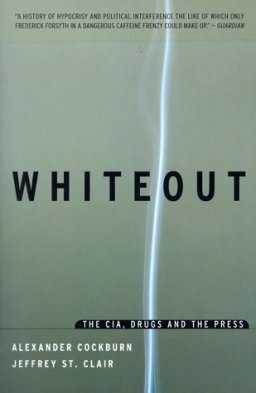
[…] breakthrough piece chronicling the links between the CIA; the Contras and the crack cocaine explosion in Los Angeles; through the CIA’s use of psychedelics, ex-Nazi scientists and mind control, into the murky worlds of Indo-China; and then, via a chapter on Afghanistan, back to the United States and the cocaine connections to Arkansas and […]
Lobster Issue 35 (Summer 1998)
The history of the police, fascism and anti-fascism in Britain, is dominated by three very different interpretations. First, there is the argument that the police acted as a constraint against fascism: intervening against fascist groups as the need arose. Second, there is the opposite view: that the police were a hindrance to anti-fascists, acting always … Read more
Lobster Issue 46 (Winter 2003)
A guided democracy The following appeared in the Daily Telegraph 23 June 2003. ‘Edward Heath created a secret government propaganda unit to persuade the British people to accept the Common Market. Civil servants were engaged in a dirty tricks department of the Foreign Office to cover up the threat to sovereignty and provide rapid rebuttal … Read more