Lobster Issue 47 (Summer 2004)
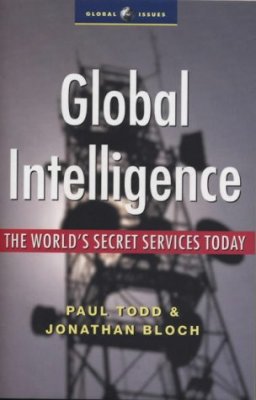
Global Intelligence: the World’s Secret Services Today Paul Todd and Jonathan Bloch, London and New York, Zed Books, 2003 h/back £32.95/ $55.00 p/back £9.99/ $17.50 ‘We lacked specific information on many key aspects of Iraq’s WMD program’ Vice chairman of the National Intelligence Council, Stuart Cohen, December 2003 With the spectacular failure of […]
Lobster Issue 32 (December 1996)
[…] experiments were discussed in conjunction with atomic bomb testings. The CIA’s human behaviour control program was chiefly motivated by perceived Soviet, Chinese, and North Korean use of mind control techniques. The CIA originated its first program in 1950 under the name of BLUEBIRD, which in 1951, after Canada and Britain had been included, was […]
Lobster Issue 40 (Winter 2000/1)
[…] 30 July 2000 The Punch story, in issue 117, October 2000, about Sir John Browne of BP, Prime Minister Blair and the Russian oil money comes to mind – unless the retired SIS officer that sits on BP’s board forgot to check out the latest news from Russia with his former SIS colleagues. It […]
Lobster Issue 53 (Summer 2007)
The Westminster Whistleblowers: Shirley Porter, homes for votes and twenty years of scandal in Britain’s rottenest borough Paul Dimoldenberg London: Politicos, 2006, £12.99, p/b The author was a Labour councillor in Westminster during Porter’s ‘reign of terror’ and was instrumental in eventually bringing her down. With an insider’s view he has written an immensely … Read more
Lobster Issue 47 (Summer 2004)
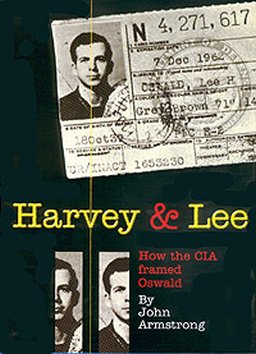
John Armstrong Arlington, Texas: Quasar Ltd., 2003 $40, plus postage, from <www.jfkresearch.com/armstrong/> This is a major publishing event in the JFK assassination world. Parts of Armstrong’s work has been on the Net and he’s spoken at some of the big JFK conferences. His work-in-progress became spoken of as ‘the John Armstrong research’; and finally … Read more
Lobster Issue 32 (December 1996)
[…] of Defense during the Kennedy administration because the work ‘disgusted’ him. One scientist who knew Stark says he claimed to have been attached to the CIA ‘ mind control’ project – later revealed as MKULTRA.(1) The Brotherhood of Eternal Love Stark had world-wide business interests in pharmaceuticals. Behind his various ‘legit’ fronts, by 1969 […]
Lobster Issue 57 (Summer 2009)
I sent the following by e-mail to a number of people: ‘Thus Martin Jacques in the New Statesman: ‘For the next 30 years, neoliberalism – the belief in the market rather then the state, the individual rather than the social – exercised a hegemonic influence over British politics, with the creation of New Labour signalling … Read more