Lobster Issue 32 (December 1996)
[…] about Spanish history and just skipped those sections.) The book as a whole is an interesting account of the post-war British left, albeit from one particular viewpoint; and, despite odd flashes of score-settling, Meltzer is an amusing raconteur. But a memoir without a name index…..? A metaphor involving tits and a bull comes to mind.
Lobster Issue 24 (December 1992)
[…] Parliament. As to the charges against Fiore, having no Italian contacts and distrusting greatly the scant British press reports of the matter, I still have an open mind, and would be grateful for any information readers of Lobster can supply on this important matter. Times 19 February 1983 and Sunday Times 20 February 1983. […]
Lobster Issue 37 (Summer 1999)
Flying Saucers over Los Angeles The UFO Craze of the 1950s Dwayne B. Johnson and Kenn Thomas Adventures Unlimited Press, Kempton, Illinois, USA, 1998, $16.00 Flying Saucers over America Steamshovel Supplement to Flying Saucers Over Los Angeles Steamshovel Press, 1998, $20 Two more productions from the prolific Kenn Thomas. Flying Saucers Over Los Angeles is … Read more
Lobster Issue 45 (Summer 2003)
James Kelly Published by the author at 30 Curzon St., Dublin 8 ISBN 0 9535992 0 5, £11.95, p/b This is the second version of this story by James Kelly. The first, Orders for the Captain, was reviewed in Lobster 15. Kelly was a senior officer in the Irish intelligence service who became involved in … Read more
Lobster Issue 49 (Summer 2005)
Henry McDonald and Jim Cusack London: Penguin, 2004, £12.99, p/b Henry McDonald’s highly readable recent book with Jim Cusack on the Ulster Defence Association (UDA) is everything that other recent offerings on the subject were not. On the one hand, it avoids the kind of borderline homo-erotic sensationalism, in which the atrocities of self-serving … Read more
Lobster Issue 32 (December 1996)
A. J. Davies Little Brown and Co London, 1995, £20 Davies provides in equal measure a perceptive and comprehensive account of the modern Conservative Party which, hopefully, will lead to further reappraisals of Conservative history. In contrast to, for example, Lord Blake’s standard history of the Party over much the same period, We, The Nation … Read more
Lobster Issue 52 (Winter 2006/7)
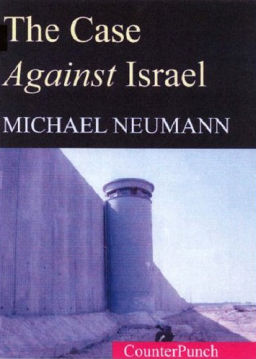
The Case Against Israel Michael Neumann Oakland (US): CounterPunch, $15 Edinburgh (UK): AK Press, £10, 2005 The Power of Israel in the United States James Petras Atlanta and Black Point: Clarity Press and Fernwood Books, 2006, $16.95 In a year in which Israel’s attacks on Lebanon and Gaza were accompanied by more stories of … Read more