Lobster Issue 24 (December 1992)
Peter Dale Scott and Jonathan Marshall University of California Press, Cambridge (UK) 1991, £8.95. The basic rule of politics, domestic and international is that my enemy’s enemy is my friend. That rule ensured that the CIA adopted as allies the opium growers of the Golden Triangle in the 1960s and 70s, and the heroin producing […]
Lobster Issue 52 (Winter 2006/7)
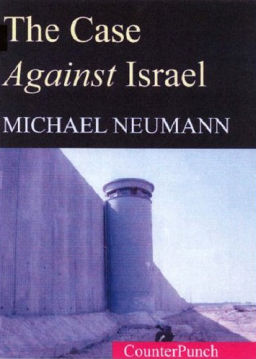
The Case Against Israel Michael Neumann Oakland (US): CounterPunch, $15 Edinburgh (UK): AK Press, £10, 2005 The Power of Israel in the United States James Petras Atlanta and Black Point: Clarity Press and Fernwood Books, 2006, $16.95 In a year in which Israel’s attacks on Lebanon and Gaza were accompanied by more stories of … Read more
Lobster Issue 38 (Winter 1999)
[…] remains questionable – and here the CIA dimension takes on a greater importance. But neither was the end of ideology simply a CIA plot. With this in mind, what is perhaps more relevant is how this anti-ideological standpoint enabled the Congress to hold together a broad crosssection of the intellectual community who saw it […]
Lobster Issue 45 (Summer 2003)
[…] was perceived as anti-socialist/communist, the FCS became cheerleaders for whichever bunch of murderous thugs happened to be getting support from Washington: Renamo and the Contras come to mind. About Mozambique or Nicaragua, they knew the best part of fuck-all; but they didn’t need to: if X was fighting a socialist government, X deserved their […]
Lobster Issue 55 (Summer 2008)
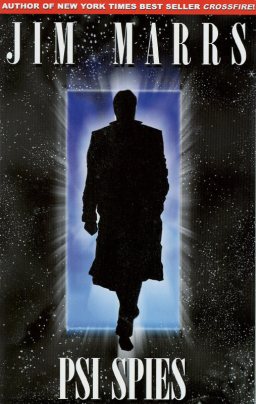
[…] which I’ve read a couple, but also in Jim Schnabel’s 1997 Remote Viewers, which covers very similar ground to Marrs, and in a chapter in Armen Victorian’s Mind Controllers. Of the two book-length accounts I prefer Schnabel; but if that is no longer available, Marrs’ version of the material would do. For the basic […]
Lobster Issue 49 (Summer 2005)
Henry McDonald and Jim Cusack London: Penguin, 2004, £12.99, p/b Henry McDonald’s highly readable recent book with Jim Cusack on the Ulster Defence Association (UDA) is everything that other recent offerings on the subject were not. On the one hand, it avoids the kind of borderline homo-erotic sensationalism, in which the atrocities of self-serving … Read more
Lobster Issue 32 (December 1996)
Researching the European State: a critical guide Edited by Tony Bunyan Statewatch PO Box 1516, London N16 0EW £7.00 With sixty A4 pages plus a six page index, this is, as the title suggests, an annotated bibliography. The flyer which came with it accurately described it thus: ‘This is the first bibliography on the European […]
Lobster Issue 37 (Summer 1999)
Flying Saucers over Los Angeles The UFO Craze of the 1950s Dwayne B. Johnson and Kenn Thomas Adventures Unlimited Press, Kempton, Illinois, USA, 1998, $16.00 Flying Saucers over America Steamshovel Supplement to Flying Saucers Over Los Angeles Steamshovel Press, 1998, $20 Two more productions from the prolific Kenn Thomas. Flying Saucers Over Los Angeles is … Read more