Lobster Issue 57 (Summer 2009)
[…] industrial trade union, led by CPGB members and ex-members, opposing government policy, was more than enough. The nonsense – the communist conspiracy theory – in Mrs Thatcher’s mind was of no relevance to MI5. But it surely is relevant to this story. Beckett and Hencke give us an expanded take on the received version […]
Lobster Issue 24 (December 1992)
[…] Parliament. As to the charges against Fiore, having no Italian contacts and distrusting greatly the scant British press reports of the matter, I still have an open mind, and would be grateful for any information readers of Lobster can supply on this important matter. Times 19 February 1983 and Sunday Times 20 February 1983. […]
Lobster Issue 37 (Summer 1999)
Flying Saucers over Los Angeles The UFO Craze of the 1950s Dwayne B. Johnson and Kenn Thomas Adventures Unlimited Press, Kempton, Illinois, USA, 1998, $16.00 Flying Saucers over America Steamshovel Supplement to Flying Saucers Over Los Angeles Steamshovel Press, 1998, $20 Two more productions from the prolific Kenn Thomas. Flying Saucers Over Los Angeles is … Read more
Lobster Issue 50 (Winter 2005/6)
[…] who was outraged by the Watergate break-in, which (we’re told) was about Nixon’s evil spooks breaking into, and bugging, the Democratic National Committee at the Watergate. (Never mind that the only bugging device found inside the DNC was characterized as a broken ‘toy’ by Felt’s own FBI – that’s a very different story.) Doesn’t […]
Lobster Issue 43 (Summer 2002)
[…] subject which does not incorporate McClure’s essay will be inadequate. Fortean Studies Volume 7 also includes in its 267 pages essays on asymmetric sociology and UFOs, ‘large acquatic cryptids’, parapsychology and the philosophy of mind, Jack the Ripper, hypno-regression, the origins of British neo-paganism, historical accounts of ‘Nessie’, flea circuses and ‘abducting entities in Malaysia’.
Lobster Issue 32 (December 1996)
[…] about Spanish history and just skipped those sections.) The book as a whole is an interesting account of the post-war British left, albeit from one particular viewpoint; and, despite odd flashes of score-settling, Meltzer is an amusing raconteur. But a memoir without a name index…..? A metaphor involving tits and a bull comes to mind.
Lobster Issue 39 (Summer 2000)
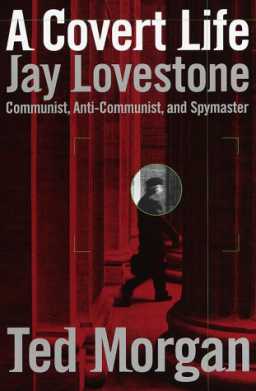
A Covert Life. Jay Lovestone: Communist, Anti-Communist, and Spymaster Ted Morgan New York: Random House, 1999, $29.95 Freedom’s War: The US Crusade Against the Soviet Union Scott Lucas Manchester: Manchester University Press, 1999, £45 Secret History: The CIA’s Classified Account of its Operations in Guatemala 1952-54 Nick Cullather Stanford (California): Stanford University Press 1999, £8.95 […]
Lobster Issue 53 (Summer 2007)
Ismael Hossein-Zadeh New York and London: Palgrave MacMillan, 2006 $75.00 (US), £37.99 (UK), h/b This is an interesting and timely book and it is a great pity it is so expensive. Put out as a paperback and maybe with a less academic-sounding title, this would sell. Little of it is intellectually taxing and any […]