Lobster Issue 51 (Summer 2006)
[…] 1953. This is Fisk’s observation on that 1997 meeting at Woodhouse’s retirement home in Oxford: ‘The coup against Mossadeq, the return of the Shah, was, in Woodhouse’s mind, a holding operation, a postponement of history. There was also the little matter of the AIOC, the Anglo-Iranian Oil Company – later British Petroleum – which […]
Lobster Issue 43 (Summer 2002)
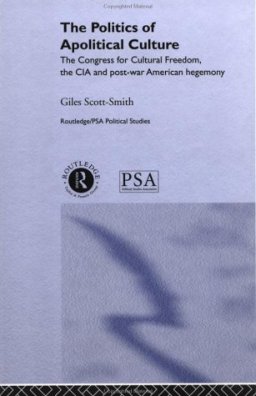
Giles Scott-Smith London: Routledge/PSA 2002, £55 This is a welcome addition to the growing literature on the Congress for Cultural Freedom, the CIA-funded operation that ran for two decades after World War II of which Encounter magazine was the best-known British component. Giles Scott-Smith has added to the historical record well illuminated by Christopher … Read more
Lobster Issue 54 (Winter 2007/8)
[…] I might take this as a claim that Britain’s security and intelligence institutions have been involved in assassinations (the attempts to get Nasser or Lumumba spring to mind). Paget’s reply to Fayed’s assertion is: ‘It is important to note in the Stevens (Northern Ireland) Report that the term “agents” is used to refer to […]
Lobster Issue 57 (Summer 2009)
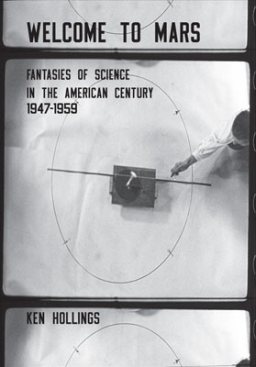
[…] were the other stories. Some were the horror stories with which we have become familiar: for example MK-Ultra and Ewen Cameron’s insane experiments with reprogramming the human mind which Hollings discusses. But also: by 1959 Cary Grant had taken LSD over 60 times as part of a Hollywood set who were using it with […]
Lobster Issue 32 (December 1996)
[…] of Defense during the Kennedy administration because the work ‘disgusted’ him. One scientist who knew Stark says he claimed to have been attached to the CIA ‘ mind control’ project – later revealed as MKULTRA.(1) The Brotherhood of Eternal Love Stark had world-wide business interests in pharmaceuticals. Behind his various ‘legit’ fronts, by 1969 […]
Lobster Issue 43 (Summer 2002)
Secret Underground Cities: an account of some of Britain’s subterranean defence, factory and storage sites in the Second World War N. J. McCamley Barnsley, Yorkshire: Leo Cooper, 1999, £14.95 (sb) Secret Nuclear Bunkers: the passive defence of the western world during the Cold War N. J. McCamley Barnsley, Yorkshire: Leo Cooper, 2002, £19.95 (hb) … Read more
Lobster Issue 28 (December 1994)
[…] seemed extraordinary to me that the ship, with all its wealth of unhappy information still available, had been deliberately sunk unless there was some other purpose in mind. One likely explanation would be a problem with nuclear weapons still on board, in which case an appropriate course of action would be to sink the […]