Lobster Issue 28 (December 1994)
[…] writing the Security Service had not quite taken over all the areas they have set their minds on. Apparently with the model of the FBI’s franchise in mind – subversion, terrorism, espionage and federal crime – Mrs Rimington is pitching to take over part of the police’s crime franchise. She offers MI5’s ‘distinctive role…..the […]
Lobster Issue 41 (Summer 2001)
[…] by circling sharks. The Politicisation of Polly Peck ‘Certain values in life are higher than commerce, profits or personal benefits. The issue of northern Cyprus in my mind should be valued that high’ – Ail Nadir. (4) From 1987 onwards, Polly Peck became increasingly a political entity, as well as a commercial one: in […]
Lobster Issue 24 (December 1992)
[…] to an interview with Jonathan Vankin, author of what sounds like a kind of compendium of conspiracies and conspiracy theories, Conspiracies, Cover-ups and Crimes: Political Manipulation and Mind Control in America (Paragon Books). Vankin offered this: ‘The accepted paradigm — the established view that the conspiracy theorists are struggling to overthrow — might be […]
Lobster Issue 54 (Winter 2007/8)
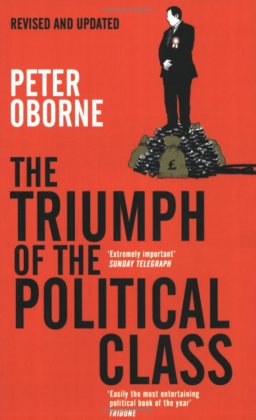
The Triumph of the Political Class Peter Oborne London: Simon & Schuster, 2007, £18.99 Thinker, Faker, Spinner, Spy: Corporate PR and the Assault on Democracy Edited by William Dinan and David Miller London: Pluto, 2007, £15.99 End Times: The Death of the Fourth Estate Alexander Cockburn and Jeffrey St Clair CounterPunch and AK Press, Oakland … Read more
Lobster Issue 32 (December 1996)
[…] proposal and submit it to them. When I inquired about some landing reports, I was asked to specify the date of the particular cases I had in mind. Although this is a component of the MOD, it is not situated in Whitehall. Neither is it Defence Intelligence 55 (DI55), though sources within DI55 have […]
Lobster Issue 36 (Winter 1998/9)
edited by Rhodri Jeffreys-Jones and Christopher Andrew Frank Cass, London/Portland, Oregon, 1997, £15.00 pb There are two kinds of books about the CIA: there are those like William Blum’s, advertised in this issue, which see the CIA simply as part of the US post-war empire, the sharp end of imperial enforcement, somewhere between the […]
Lobster Issue 48 (Winter 2004)
Who was who? The newly published Oxford Dictionary of National Biography not only surveys the lives of the great and the good, but also includes accounts of individuals in the murkier fields of human endeavour. Over fifty spies are listed, for example, including historical figures such as ‘Parliament Joan’ (c1600-1655?) and ‘Pickle the Spy’ (c1725-1761). … Read more
Lobster Issue 32 (December 1996)
[…] experiments were discussed in conjunction with atomic bomb testings. The CIA’s human behaviour control program was chiefly motivated by perceived Soviet, Chinese, and North Korean use of mind control techniques. The CIA originated its first program in 1950 under the name of BLUEBIRD, which in 1951, after Canada and Britain had been included, was […]
Lobster Issue 40 (Winter 2000/1)
[…] for this sensitive mission, there was only one crew-member, the pilot. This makes sense in terms of secrecy, a consideration that would have been paramount in the mind of the CIA planners. Because of this necessary limitation, is it not possible that the aircraft was adapted to carry its munitions on wing pylons that, […]