Lobster Issue 35 (Summer 1998)
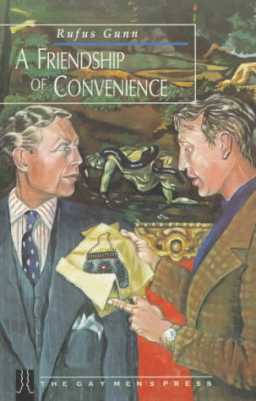
[…] chance meeting between the two comes to the attention of MI5, and Blunt is instructed to befriend Losey and monitor his activities on behalf of the American intelligence services. In doing so, he comes to admire Losey’s principled political views and his refusal to name names, unlike many of his compatriots. As their friendship […]
Lobster Issue 47 (Summer 2004)
[…] article Foundations and Empire, produced by the Solidarity group circa 1970, and possibly part of a magazine, documents a number of connections between the British and American intelligence services and their fronts and GMWU (as the GMB was then) officials and officers in the1950s and 60s. 7 Most people seem to recollect that this […]
Lobster Issue 37 (Summer 1999)
Flying Saucers over Los Angeles The UFO Craze of the 1950s Dwayne B. Johnson and Kenn Thomas Adventures Unlimited Press, Kempton, Illinois, USA, 1998, $16.00 Flying Saucers over America Steamshovel Supplement to Flying Saucers Over Los Angeles Steamshovel Press, 1998, $20 Two more productions from the prolific Kenn Thomas. Flying Saucers Over Los Angeles is … Read more
Lobster Issue 44 (Winter 2002/3)
[…] This is inevitable. The world changes, priorities change and the people writing for Lobster change. When Lobster began in 1983 its chief focus was information on the intelligence and security services. There was almost no information on them in those days and every scrap seemed important. These days such information is available in abundance […]
Lobster Issue 33 (Summer 1997)
[…] public relations campaign for the Kuwaiti government during the Gulf War. According to Covert Action, it is a company with strong links to the US security and intelligence community. Lloyd is the author of the anodyne history of the EEPTU, Light and Liberty (Weidenfeld and Nicolson, London, 1990). These are discussed in the next […]
Lobster Issue 51 (Summer 2006)
[…] played an important ideological role in broadly speaking secular organisations. The John Birch Society was founded in 1958. It took its name from a Baptist missionary and intelligence officer who had been killed by the Communist Chinese and whom they described as the first casualty of the Cold War. The Birchers claimed that America […]