Lobster Issue 57 (Summer 2009)
[…] hinted that something might turn up from an unexpected quarter. Turner suspects that Farewell America was that something; that although the book was put together by French intelligence people, it was the contact with Kostikov which led to it. The pseudonymous writer of the book was Thomas Buchanan, author of the 1964 Who Killed […]
Lobster Issue 52 (Winter 2006/7)
[…] MI6 no. 2, George Kennedy Young, loomed large in the imagination of the section of the British left which was interested in the political activities of former intelligence officers. His activities with Unison in 1973-5 remain unclear but here John Andrews describes the group which succeeded it, Tory Action. Lobster 19 contained an autobiographical […]
Lobster Issue 57 (Summer 2009)
In Parish Notices in the last issue I wrote ‘there isn’t much in this issue about the economic situation because there really isn’t much to say that hasn’t already been said, for example by Larry Elliot in The Guardian every week.’ Well, I changed my mind about that and here are the bits I found … Read more
Lobster Issue 36 (Winter 1998/9)
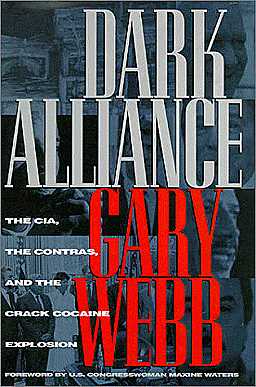
[…] drug and other criminal activities the Nicaraguan bishops had complained back in 1978. Equally disastrous was the initial decision to leave oversight of the Contras to Argentine intelligence officers, for whom the drug-financing of operations was a way of life. On March 16, 1998, in response to Webb’s allegations, the CIA Inspector-General admitted that […]
Lobster Issue 42 (Winter 2001/2)
Dr David Turner went to former MI5 Director-General Stella Rimington’s book-signing at Hatchard’s, Piccadilly, on 18 September 2001, where the following exchange took place. Turner (presenting book for signing after queuing briefly behind several people, including a woman wearing an Anarchist badge) ‘Hello. Do you mind a lengthy inscription?’ Rimington (smiling, flanked by several […]
Lobster Issue 30 (December 1995)
[…] had gained in popular strength, although its steady infiltration of the Iranian government and other institutions continued’.(69) As for the Tudeh’s attempting a coup, a State Department intelligence report of January 1953 noted that ‘an open Tudeh move for power……would probably unite independents and non-communists of all political leanings and would result……in energetic efforts […]
Lobster Issue 38 (Winter 1999)
[…] would announce the creation of a new housing inspectorate. Lucas passed this on to his affected clients. He gave me other examples of what he called ‘… intelligence which in market terms would be worth a lot of money.’ The firm of GJW obtained advance word on the moratorium on gas-fired power stations which […]
Lobster Issue 36 (Winter 1998/9)
[…] have been characterised by a special Anglo-American relationship, running in parallel with the strategic one based on collaboration in NATO and the UN, as well as in intelligence sharing and nuclear weapons policy. The ideological rationale for all this has been the defence of liberal capitalism (equated with freedom of speech and national self-determination) […]
Lobster Issue 48 (Winter 2004)
[…] striking feature of this particular kind of article). Everything from an interest in crop circles to ‘the belief in sinister links between the military-industrial complex and the intelligence services’ is taken as evidence of ‘a flight from reason’ on the part of the public. She also suggests some possible causes for the growing vogue […]