Lobster Issue 53 (Summer 2007)
[…] claimed to be confidential briefings “off the record”. The real reason which could not be told publicly for our entry to the common market was because our intelligence service had learned the Soviet Unions had plans to invade Western Europe and these would be carried out once the trade unions in Western Europe led […]
Lobster Issue 36 (Winter 1998/9)
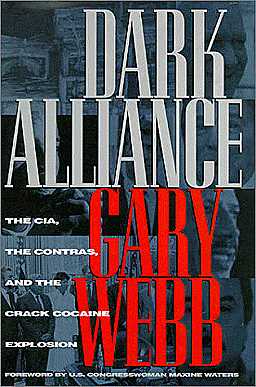
[…] drug and other criminal activities the Nicaraguan bishops had complained back in 1978. Equally disastrous was the initial decision to leave oversight of the Contras to Argentine intelligence officers, for whom the drug-financing of operations was a way of life. On March 16, 1998, in response to Webb’s allegations, the CIA Inspector-General admitted that […]
Lobster Issue 49 (Summer 2005)
[…] him by launching the largest private sector political warfare campaign in history against him. But there are other factors. For an American politician, getting embroiled with the intelligence services or the military looks almost uniquely dangerous. There are also two more general reasons for the inertia. The Democrats are reluctant to criticise America, domestically […]
Lobster Issue 51 (Summer 2006)
[…] agency in the covert alliance is simply doing what it is told. Nothing has changed in 20 years, the UN is still a prime target for US intelligence and, doubt-less, little old New Zealand is still doing its bit.'(3) Were an equivalent report on GCHQ to turn up in the UK, would any of […]
Lobster Issue 30 (December 1995)
[…] had gained in popular strength, although its steady infiltration of the Iranian government and other institutions continued’.(69) As for the Tudeh’s attempting a coup, a State Department intelligence report of January 1953 noted that ‘an open Tudeh move for power……would probably unite independents and non-communists of all political leanings and would result……in energetic efforts […]
Lobster Issue 53 (Summer 2007)
[…] As Phillips describes it, the British state and its politicians declined to do anything about this even though they were warned repeatedly throughout the 1990s by other intelligence services and other states. Phillips attributes this inactivity to a combination of political reluctance to tackle something as sensitive as immigration and concern about the impact […]
Lobster Issue 36 (Winter 1998/9)
[…] have been characterised by a special Anglo-American relationship, running in parallel with the strategic one based on collaboration in NATO and the UN, as well as in intelligence sharing and nuclear weapons policy. The ideological rationale for all this has been the defence of liberal capitalism (equated with freedom of speech and national self-determination) […]
Lobster Issue 42 (Winter 2001/2)
Dr David Turner went to former MI5 Director-General Stella Rimington’s book-signing at Hatchard’s, Piccadilly, on 18 September 2001, where the following exchange took place. Turner (presenting book for signing after queuing briefly behind several people, including a woman wearing an Anarchist badge) ‘Hello. Do you mind a lengthy inscription?’ Rimington (smiling, flanked by several […]
Lobster Issue 38 (Winter 1999)
[…] would announce the creation of a new housing inspectorate. Lucas passed this on to his affected clients. He gave me other examples of what he called ‘… intelligence which in market terms would be worth a lot of money.’ The firm of GJW obtained advance word on the moratorium on gas-fired power stations which […]