Lobster Issue 30 (December 1995)
[…] claim in The Times by the Cambridge historian Professor Christopher Andrew, that Arthur Ransome has been identified in KGB documents as ‘the most important secret source of intelligence on British foreign policy’ for the Cheka, the terror organisation of Bolshevik Russia, has infuriated lovers of Ransome’s work. Unlike Michael Foot, similarly traduced, Ramsome is […]
Lobster Issue 38 (Winter 1999)
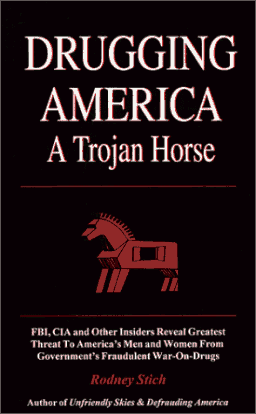
[…] embarrassment to ‘national security’ while trying to prosecute the ‘war on drugs’. It also contains the best account I have read of how the actions of the intelligence agencies in the United States, chiefly the CIA, produce unanticipated consequences. I will try to summarise this. A group of Cuban Bay of Pigs veterans created […]
Lobster Issue 54 (Winter 2007/8)
BERR In a profile of John Hutton, the new Secretary of State for Business, Enterprise and Regulatory Reform, Hutton said that Labour ‘is the natural party of business’,(1) another benchmark (or, in Corinne Souza country, ‘rebranding’) in the shift from old to New Labour. For it was Harold Wilson’s boast that he had made Labour […]
Lobster Issue 45 (Summer 2003)
[…] Spooks Richard L. Russell, an academic based at the Near East-South Asia Center for Strategic Studies, the National Defense University, examines the strengths and weaknesses of American intelligence during the first Gulf War. As you would expect from someone who worked for the CIA (he was a political-military analyst specialising in Middle East and […]
Lobster Issue 40 (Winter 2000/1)
[…] (p. 372) – an absurd description for a man who, by his own admission, spent virtually the whole of the post-war period working for British and American intelligence. His role in educating Thatcher on security and intelligence issues with his Shield group of old spooks is omitted and his memoir is not included in […]
Lobster Issue 42 (Winter 2001/2)
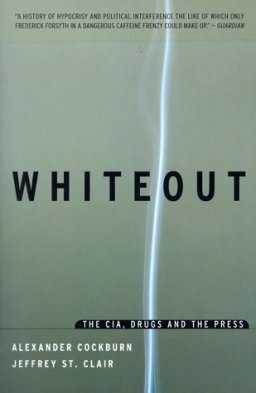
Alexander Cockburn and Jeffrey St. Clair London:Verso, 1999, £10 Much has been written about the role of the Central Intelligence Agency in the global drugs trade but this is the first book that actually brings it all together in one place. The authors haven’t exposed much that is new, instead they have taken […]