Lobster Issue 35 (Summer 1998)
[…] searchable collection of documents, working papers, and articles from the CWIHP bulletin. Covers numerous topics related to the Cold War. Categories include arms race, Cold War origins, intelligence, Krushchev era, Stalin Era. Declassification of CIA critique on Bay of Pigs http://www.seas.gwu.edu/nsarchive/news/19980222.htm Withheld for 36 years, this 150pp report, officially known as ‘The Inspector General’s […]
Lobster Issue 44 (Winter 2002/3)
[…] (with support from several religious leaders), businesses (British and European bankers, insurers, and manufacturers for example), and by the EU itself. Following the publication of The Economist Intelligence Unit report, Britain in Europe, in May 1961, several of these organisations merged. This report followed two earlier studies, in 1957 and 1958, both of which […]
Lobster Issue 35 (Summer 1998)
[…] Officers’ College, and currently is serving in His Majesty’s Guard.’ According to a CIA report dated February 1976, ‘The Shah’s communication and relations with his military and intelligence organs are conducted through one of his oldest friends, who was the Shah’s classmate. Hossein Fardust and the Shah attended the same school, Le Rose, in […]
Lobster Issue 41 (Summer 2001)
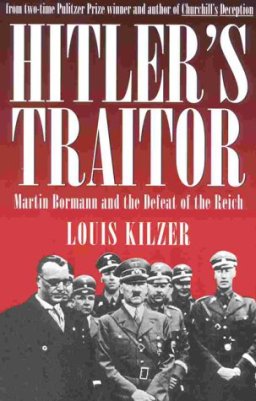
[…] portions of it had survived various Gestapo crack-downs and had gone on to become embedded in the new pro-NATO West German state.) Kilzer reasons that because the intelligence provided by the Orchestra to the Soviets was so good, so detailed and so close to the commands issuing from Hitler’s HQ, the source of this […]
Lobster Issue 30 (December 1995)
[…] evidence shows that in each of these cases, the assassinations were ordered from London and carried out by professional assassins under the control of His Majesty’s Secret Intelligence Services. In each instance, the targeted American President had been in a policy war with the British Crown at the time of his murder.’ Thus speaks […]
Lobster Issue 52 (Winter 2006/7)
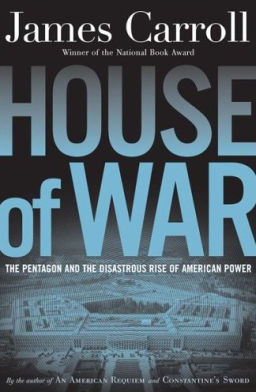
[…] a huge book elaborating Bosch’s thesis. Around that core are subsidiary themes. One is a personal memoir. The author’s father was General Carroll, head of the Defence Intelligence Agency in the 1960s, and as a child the author played in the corridors of the Pentagon, turning against American power and militarism during the Vietnam […]
Lobster Issue 39 (Summer 2000)
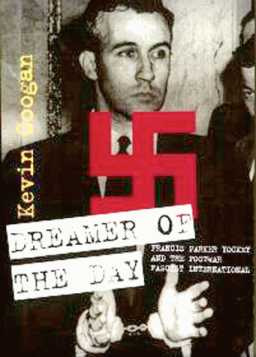
[…] to disappear from view is what made for such a protracted manhunt; and the book itself is a fascinating case study of how the FBI and related intelligence agencies interact to compile information and track their subject. As it is, Coogan’s biography at last centrally locates Yockey, and his importance to post-war fascism, by […]
Lobster Issue 54 (Winter 2007/8)
[…] and deadly games Tennent H. Begley London and New Haven: Yale University Press, 2007, h/b, £18.99 Begley was one of James Angleton’s allies in CIA counter intelligence and this book is the Angletonian view of the Nosenko case, one of the touchstones or causes célèbres of the CIA in the post-war era. Briefly, […]