Lobster Issue 50 (Winter 2005/6)
[…] the tax net. Expenditure (as in the Euro-pean defence sector) has to be focused ever more precisely on ‘efficient ends’. So, a great deal of security and intelligence activity is not about our personal security at all (otherwise, we might see a policeman on our streets occasionally or a different attitude to the licensing […]
Lobster Issue 48 (Winter 2004)
[…] deal with corruption and ineptitude. In their mission, they operate with minimal democratic accountability as their trans-national operations bring them into ever closer association with security and intelligence services with whom they increasingly share the same ideology of global threat. They are, in short, constructing the basis for the new European, indeed ‘Western’, Security […]
Lobster Issue 32 (December 1996)
[…] of new material on the assassination of the sixties and related events. It contains pieces on William Pepper’s excellent book Orders to Kill (reviewed above); Garrison; military intelligence in Dallas; Cuban intelligence and JFK – the Cubans’ viewpoint; a report on the Coalition’s annual conference; updates on material generated by FOIA requests and by […]
Lobster Issue 56 (Winter 2008/9)
[…] member of the American Psychological Association’s taskforce on psychologists’ involvement in interrogations and she’s recently gone public about some of the confidential discussions with the military and intelligence people involved in the taskforce ……. ’(1) But there are other Arrigos; Jean Maria is one of three sisters. There is a Dr. Sue Arrigo, who […]
Lobster Issue 56 (Winter 2008/9)
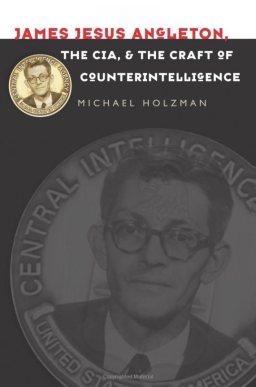
James Jesus Angleton The CIA and the craft of counter intelligence Michael Holzman Amherst: University of Massachusetts Press, 2008, p/b, $28.95 Of all the figures in the Anglo-American spy world that we have been made aware of in the last 40 years, James Jesus Angleton was the most glamorous: the chain-smoking, the orchid-growing, the […]
Lobster Issue 35 (Summer 1998)
[…] source is the 1948 interrogation of Henrich Muller published in 1995 by R. J. Bender of San Jose, CA., a well-known militaria publisher. Muller was the German intelligence officer in charge of anti-Soviet operations and the material about the Soviet Union in the conversation was forwarded to him. At the end of the war, […]