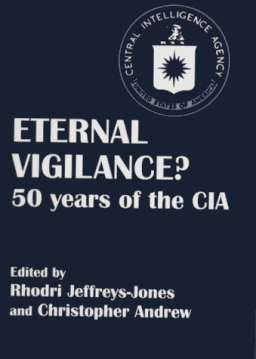
Lobster Issue 35 (Summer 1998)
[…] the Technologies of Political Control – was commissioned last year by the Civil Liberties Committee of the European Parliament. It contains details of a network of American-controlled intelligence stations on British soil and around the world, that ‘routinely and indiscriminately’ monitor countless phone, fax and e-mail messages. It states: ‘Within Europe all e-mail telephone […]
Lobster Issue 48 (Winter 2004)
[…] characters, such as Greville Wynne and John Vassall, to major operators Blunt, Burgess, Maclean and Philby. ‘Spooks’ are also covered, with almost ninety members of the intelligence community listed. Many of these had other occupations John Henry Bevan (‘intelligence officer and stockbroker’), Maurice James Buckmaster (‘intelligence officer and businessman’), Tomas Joseph Harris […]
Lobster Issue 50 (Winter 2005/6)
[…] one I can’t do it. The world is weird and the US state is capable of great evil but the people at the top of its military- intelligence complex are not stupid enough or bold enough to have sanctioned something like this. The MIHOP ‘sceptics’ presented in this book want us to believe that […]
Lobster Issue 31 (June 1996)
[…] the Mexica Gobernación (Ministry of the Interior).(3) It also had close links with the FBI as well as the CIA, being part of a tradition of bi-national intelligence co-operation dating back to the turn of the century.(4) Three different operations involving Oswald can be distinguished in Mexico. The most obvious is the post-assassination cover-up. […]
Lobster Issue 54 (Winter 2007/8)
[…] Fadlallah was untouched, some eighty bystanders, men, women and children, were killed and over two hundred injured. The terrorist organisation responsible for this attack was the Central Intelligence Agency (CIA).(1) An overwhelming case can be made that the CIA has been the most dangerous terrorist organisation at work in the world since the Second […]
Lobster Issue 36 (Winter 1998/9)
[…] of things is uninteresting. This collection contains three essays of note. The first is Bob de Graff and Cees Wiebes’ study of the CIA and the Dutch Intelligence Service, which is the first of its kind that I can think of; and is, presumably, a template for the relationship between the CIA and the […]
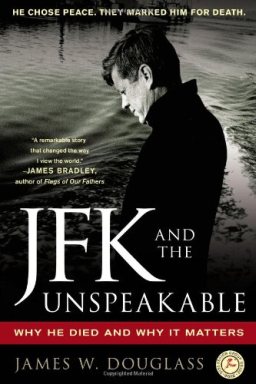
Lobster Issue 56 (Winter 2008/9)
[…] convincing. While establishing his thesis of a Kennedy newly devoted to the cause of peace, he also stakes his ground quickly on Oswald, establishing his credentials in intelligence – a familiar argument to anyone who knows the JFK case – but also showing that, far from hating Kennedy or seeing him as a target […]