Lobster Issue 56 (Winter 2008/9)
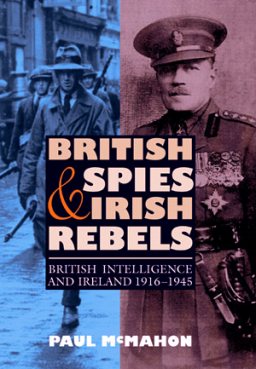
British Spies and Irish Rebels British Intelligence and Ireland, 1916-1945 Paul McMahon Woodbridge, Suffolk: The Boydell Press, 2008, h/b, £30 First up, I have no specialist knowledge of this area, so if there any howlers in here, I’m unlikely to spot them. However, I know a good book when I see one. This has been … Read more
Lobster Issue 45 (Summer 2003)
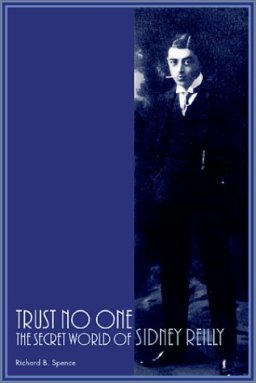
[…] Intelligence Service) used as cover the name and address ‘2 Whitehall Court c/o Captain Spencer’. There was indeed a Captain Harold Spencer operating as a British intelligence agent at this time. He later cropped up in 1918 peddling the allegations of sexual deviance in the British establishment that Pemberton-Billing used in his libel trial.(4) […]
Lobster Issue 38 (Winter 1999)
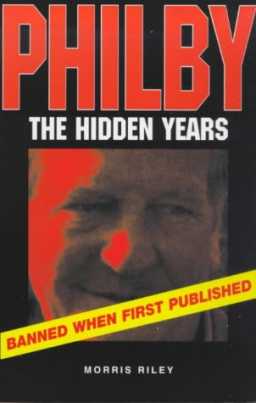
[…] to establish that Philby did more damage to British interests after 1951, when he was partly severed from SIS, than before, when he was an undetected Soviet agent in place. As Robin Ramsay noted in Lobster 37, this idea isn’t very convincing – not in any obvious sense, at least. After 1951, Philby worked […]
Lobster Issue 41 (Summer 2001)
[…] it. Not so. A few weeks went by and another person tried to attach himself to me, this time claiming to be to be a former MI5 agent who would spill the beans. But he was ill, so ill, and the NHS in London was so bad…..This goes on for some weeks and I […]
Lobster Issue 31 (June 1996)
[…] 1985 drug scandals. (Jose Antonio Zorrilla, the ex-DFS chief arrested and indicted in 1989 for murder, was in 1963 private secretary to Fernando Gutierrez Barrios, the DFS agent whose signature attested to the validity of the most radically altered version of Duran’s statement.) At least two ex-DFS officers who were also former CIA agents […]
Lobster Issue 33 (Summer 1997)
[…] North, and Felix Rodriguez, later became familiar names during the Iran-contra scandal of the 1980s. More obscure was one Michael Hand, who had been a CIA contract agent in Laos. In 1973, Hand and his partner Frank Nugan established the Nugan Hand Bank in Sydney. A slew of top-level retirees from the CIA and […]
Lobster Issue 43 (Summer 2002)
[…] in Oswald’s demi-monde of KGB agents and Cuban exiles…..’ We’ve had supporters of Castro and now he gives us KGB agents! Which ones, Professor? The only KGB agent in the story that I can recall is the KGB officer Kostikov who was under diplomatic cover in the Soviet embassy in Mexico City. Oswald – […]