Lobster Issue 24 (December 1992)
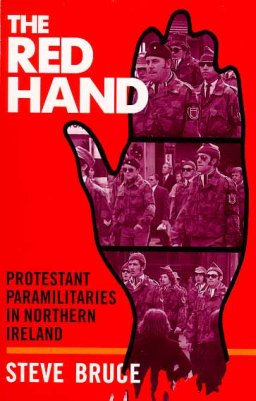
[…] 1 Assassination Team’); and the role of James Miller, the mid-1970s version of Brian Nelson. Take a bow MI5, for penetrating the UDA completely, twice getting an agent into the role of UDA ‘intelligence officer’. Bruce, a Professor of Sociology at the University of Aberdeen, who had previously worked for over a decade at […]
Lobster Issue 38 (Winter 1999)
[…] do know something, there are some dumb mistakes. The Fluency Committee was not set up in Whitehall to examine the evidence that Harold Wilson was a Soviet agent (p.148); Colin Wallace has not ‘admitted putting out anti-Wilson material in an operation known as Clockwork Orange’ (p.149). Do such minor errors matter? I doubt it […]
Lobster Issue 31 (June 1996)
[…] dates and documentation that the super-spooks were running a child-abuse and computer fraud gang in Washington DC during the 80s under the guidance of a USAF intelligence agent, Marion David Pettie. Unclassified seems somewhat uncertain about the piece, however, and refers readers’ enquiries to the author Wendell L. Minnick. The latest Unclassified (number 36) […]
Lobster Issue 31 (June 1996)
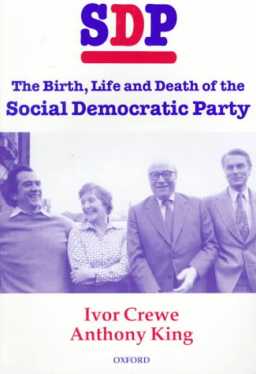
[…] it may be true that Haseler is not the important figure in starting the SDP ball rolling CIA asset Brian Crozier claims in his 1993 book Free Agent, but there can be little doubt that he had a considerable transatlantic role before and during the life of the SDP, none of it mentioned by […]
Lobster Issue 52 (Winter 2006/7)
Iraqi documents Iraq on the Record (<http://democrats.reform.house.gov/IraqOnTheRecord>) is a searchable collection of over 200 specific misleading statements made by Bush administration officials about the threat allegedly posed by Iraq. The collection would be even larger if it also included statements that appear mistaken only in hindsight. However, if a statement was ‘…an accurate reflection of … Read more
Lobster Issue 44 (Winter 2002/3)
[…] upon any sensitive operational techniques of the security and intelligence services, and in particular upon their sources of information, including the identity of any officer, contact or agent.’ After the House of Lords ruling (see below), Liberty is taking the issue of whether the Official Secrets Act 1989 is compatible with the ECHR to […]