Lobster Issue 36 (Winter 1998/9)
[…] August did not run the story but two other papers that day were dropping big hints. The Sunday Telegraph reported that ‘…a friend of the former MI5 agent told the Sunday Telegraph that there was “concrete evidence” that two senior ministers had worked for the security service…..the same source said that Mr Shayler’s girlfriend, […]
Lobster Issue 37 (Summer 1999)
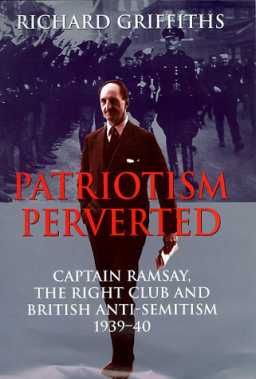
[…] all the private material between Roosevelt and Churchill 1939/1940. Originally thought to be a Nazi spy, after 1945 the CIA considered him to have been a Soviet agent all along (not a contradiction during the Nazi-Soviet Pact). Aarons and Loftus (op. cit.) also say, p. 212, that, contemporaneously with this, whilst attached to a […]
Lobster Issue 48 (Winter 2004)
[…] French intelligence, as some kind of wheeze to plant dodgy documents on the Anglo-American alliance and then expose them as fraudulent. See, for example, Bruce Johnston, ‘ Agent behind fake uranium documents worked for France’, The Sunday Telegraph 19 September 2004. 7. Review of Intelligence on Weapons of Mass Destruction, HC 898, July 2004, […]
Lobster Issue 30 (December 1995)
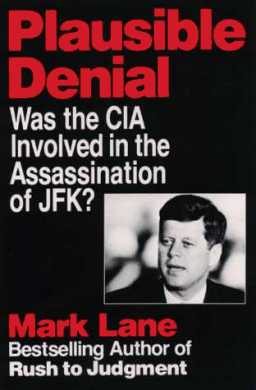
[…] New Orleans when ordering Fair Play for Cuba literature. And there are other intriguing connections and coincidences.Eddowes thought that Osborne was either a freelance or Soviet intelligence agent, The Oswald File, op cit, p. 65. I’m not sure what freelance means in this context, but for the Soviets? No. Osborne was pro-Nazi during the […]
Lobster Issue 43 (Summer 2002)
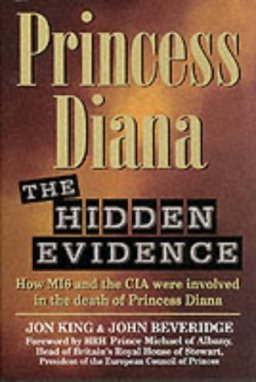
[…] motives behind the crash, but admitted that some ‘abnormal driving’ had taken place that night), a paramedic supervisor, and a US Special Forces veteran and CIA contract agent. The latter, not surprisingly, requested anonymity and is referred to throughout the book as ‘Stealth’ The meetings with him took place, rather melodramatically, at the Avebury […]
Lobster Issue 43 (Summer 2002)
Crime fighting? There must many candidates for the title ‘The most damaging thing I have read about this government’. My current candidate is a piece by Simon Jenkins, ‘A Keep Police off the Streets Strategy Unit’ (The Times 2 February 2002). After reminding the reader that in the UK the police are a local service, … Read more
Lobster Issue 24 (December 1992)
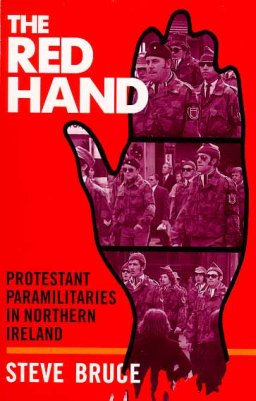
[…] 1 Assassination Team’); and the role of James Miller, the mid-1970s version of Brian Nelson. Take a bow MI5, for penetrating the UDA completely, twice getting an agent into the role of UDA ‘intelligence officer’. Bruce, a Professor of Sociology at the University of Aberdeen, who had previously worked for over a decade at […]