Lobster Issue 55 (Summer 2008)
[…] Blair and Gordon Brown, have been Thatcherite. Cusack and McDonald, The UVF, (Dublin: Poolbeg, 2000) White, B., John Hume: Statesman of the Troubles (Belfast: Blackstaff, 1984) Ulster, October, 1986 The title of the article was ‘John Hume: CIA agent’. In Lobster 33. David Trimble savaged the Jonathan Powell memoir in a review in The Guardian
Lobster Issue 49 (Summer 2005)
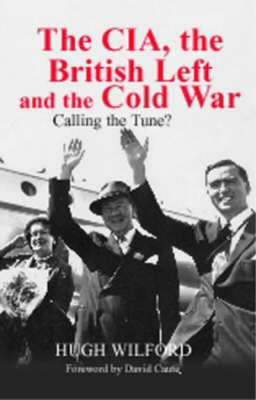
[…] its creation, it always seemed likely that Bilderberg was a British enterprise; and Wilford concludes this, citing a C. D. Jackson comment that Retinger was a British agent, an opinion ‘pretty well shared by some other people who are in a position to know better than I ’ – reference, presumably, to the CIA […]
Lobster Issue 40 (Winter 2000/1)
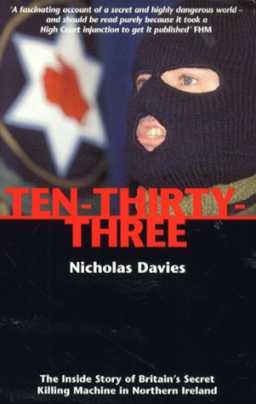
[…] assassination by proxy. Nelson, a member of the UDA, presented himself to the British intelligence apparatus at the end of 1985. He was put to work as agent ‘ten thirty three’ by the covert Force Research Unit (FRU) and, over a period of time, became the means whereby the loyalist paramilitaries were brought to […]
Lobster Issue 55 (Summer 2008)
Some of the spook recruitment pitches in the media of the last two years have gone out of their way to impress upon prospective candidates the family-friendly credentials of the major state spook employers.(1) But such measures, no matter how sincere and/or necessary, are for the most part aimed at a parent’s convenience – and … Read more
Lobster Issue 43 (Summer 2002)
[…] and the rest of the secret state; and, when the whole stupid mess ended up in court, the late Alan Clark MP was unwilling to see MI6 agent and Matrix Churchill executive Paul Henderson wrongly convicted and blew the gaff – the occasion of his famous phrase ‘economical with the actualité’. Was Matrix Churchill […]
Lobster Issue 37 (Summer 1999)
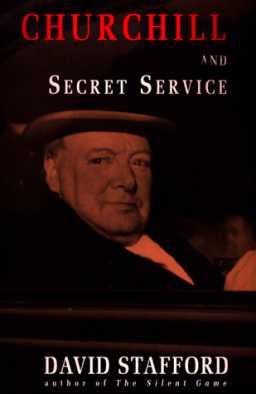
David Stafford, John Murray, London, 1997, £25 Any book dealing with Winston Churchill must situate itself within one of two rival camps. On the one hand, there are the Churchillians, who regard him as one of the great men of the twentieth century, who dominates modern times and deserves personal credit for having saved Britain … Read more