Lobster Issue 44 (Winter 2002/3)
[…] outbreak of another world war. This was predicted in March 1948 by Gehlen, who also announced at this point the diabolical role of Borman, as a Soviet agent, in masterminding these developments. International events failed to follow this timetable. To be sure the February 1948 communist seizure of power in Czechoslovakia pointed in the […]
Lobster Issue 38 (Winter 1999)
[…] the celebrities.'(53) Richard Tomlinson believed that he was an MI6 informer paid to spy on Diana and Dodi. Other sources claim that Paul was also a Mossad agent and an informant for the French foreign intelligence service. As Head of Security at the Ritz, Paul would have been ideally placed to observe and monitor […]
Lobster Issue 54 (Winter 2007/8)
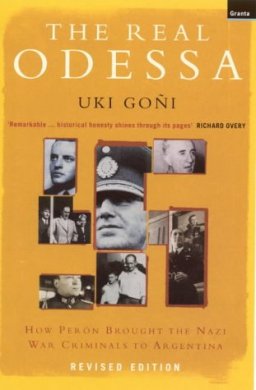
[…] the war had been won. The volume also includes interesting chapters on Vatican intelligence and the Holocaust, on the Trawniki Training Camp, on Adolf Eichmann and on agent networks in Istanbul. The other book, US Intelligence and the Nazis, is also of considerable interest. It consists of essays written, in the main, by Richard […]
Lobster Issue 34 (Winter 1997)
[…] the people who had attended its early meetings, among whom was….. David Moller. Now join up the dots. Hanky-panky in the British UFO world The former Searchlight agent provocateur, Tim Hepple, is now cruising the British UFO world under the guise of ‘Tim Matthews’ of the ‘Lancashire UFO Society’. A major attempt to spread […]
Lobster Issue 49 (Summer 2005)
Brice is right? An ‘immoral’ government has undermined human rights in Northern Ireland and is threatening to do the same across the rest of the United Kingdom, argued Professor Brice Dickson, the then Chief Commissioner of the Northern Ireland Human Rights Commission,([1]) in an interview with ePolitix.com to mark Human Rights Day last December.([2])He claimed … Read more
Lobster Issue 30 (December 1995)
[…] good issue, for in addition to Hayes there is a piece on the CIA’s co-opting of civilian air planes for covert missions, discussion of Oklahoma, an FBI agent provocateur, and an essay by Professor Carrie Foster of the Coalition on Political Assassinations Speakers Bureau, ‘Conspiracy is as American as Apple pie’. Must be something […]
Lobster Issue 41 (Summer 2001)
Malcolm Kennedy believes his telephones, email and post are being interfered with. His attempts to obtain answers have met with brick walls, and his situation has been described as Kafkaesque. Soon his complaint will be one of the first to be heard by the recently established Investigatory Powers Tribunal. Background Last Summer, Lobster drew attention … Read more
Lobster Issue 54 (Winter 2007/8)
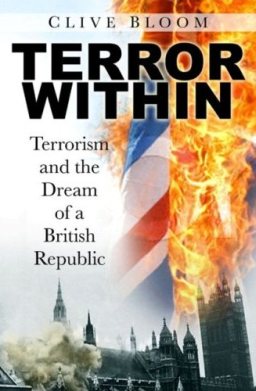
Terror Within: Terrorism and the Dream of a British RepublicClive Bloom Stroud, Glos.: Sutton, 2007, h/bk, 297 pages, h/b, £20.00 This sets out to provide a narrative describing the range of ‘attempts’ to set up a republic in Britain from the time of the French revolution until the present day. (Although the bulk of … Read more