
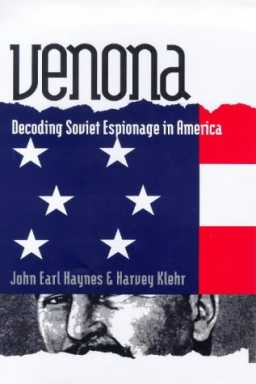
Venona: Decoding Soviet Espionage in America
James Earl Haynes and Harvey Klehr,
Yale University Press, London and Yale, 1999, £19.95
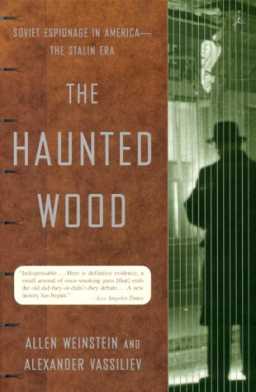
The Haunted Wood: Soviet espionage in America – the Stalin era
Allen Weinstein and Alexander Vassiliev
Random House, New York, 1999, $30.00
So now we know: most of what the Republican right in the US, the Joe McCarthys and Nixons and Hoovers, were saying in the 1950s about the presence in the US of Soviet espionage networks was basically true.
In 1943 the US Army began trying to decode the Soviet radio traffic in and out of America which they had been recording since 1939. Based on so-called one time pads (and these are explained at length in one of the chapters in Haynes and Klehr), the Soviets thought their codes unbreakable and chatted way in great detail about their agents. But by 1950 enough of the Soviet material had been decoded for the US intelligence community to begin piecing together the Soviet networks in the US. These intercepts – code named Venona – many of which remain unbroken to this day, reveal that the Rosenbergs, Alger Hiss, Harry Dexter White, Larry Duggan, Lauchlin Currie, and all the other less important causes celebres of the fifties, were guilty as charged. There are still people on the US Left clinging to the belief that this material is some kind of fake, but that seems profoundly unlikely to me. These books, with their massive documentation, constitute proof.
 On the other hand, this is also the story of the most spectacular intelligence coup of the twentieth century. In the 1930s, largely using CPUSA members or sympathisers, the Soviet Union built networks such that by the war’s beginning it had dozens of people in place to penetrate the US government, the federal bureaucracies and many of the big corporations. This is described in great, even tedious, detail in these books, especially Haynes and Klehr.
Two main points struck me after ploughing through all this.
- A great deal of the paranoia about Soviet penetration expressed by the likes of the CIA’s James Angleton, apparently inexplicable and irrational, makes sense when you grasp the scale of the Soviet’s American networks.
- The decision by the US authorities not to reveal that they had broken the Soviet codes meant that the best evidence the authorities had was never used in court when some of this network was prosecuted in the 1950s. This fact, plus the extraordinary sacrifice of the Rosenbergs, who went to the gas chamber rather than confess, and the denials of Alger Hiss for the rest of his life, provided the room for doubt which enabled large sections of the Anglo-American left to question the reality of the Soviet operations.
There are obvious parallels with MI5’s decision in the UK not to reveal the existence of the secret Soviet funding of the CPGB (a point I have laboured before in these columns). In both instances, the decision of the intelligence services to keep their knowledge to themselves prolonged the life of the pro-Soviet left – providing many lucrative, career-building opportunities for the counter-intelligence community.